“I saw under the altar the souls of those who had been slain because of the word of God and the testimony they had maintained.” (Rev 6,9)
The confreres we introduce in this section are not officially recognized as martyrs by the Church. We, CICM, honor and keep in our hearts the memory of those who have suffered martyrdom as faithful missionaries of the Gospel.
{module Martyrs}
Going back to our origins strengthens our sense of belonging to CICM
1. Our union with God is at the center of our CICM missionary life.
“We know that all our labors and pains at the service of the Kingdom have value only if the Lord of the harvest blesses them.”
2. Our motto Cor Unum et Anima Una (One Heart and One Soul), is our strength and our first witness.
3. For us, forming a community is indispensable.
On the occasion of the Centenary, the Superior General wrote: “Even if we cannot live together, we often seek each other out. We are welcome everywhere as members of the same big family, and this is a great help to each of us. The family spirit which we owe to our CICM religious formation has always been the strength of our missionary Congregation and thus has a great apostolic value.”
4. A new dimension to the idea of community: Universal Brotherhood
“We felt enriched by this gift of the Holy Spirit to our Congregation, and we learned how to appreciate the value of the witness of international teams. However, a lot still needs to be learned.”
5. Building communities with those who collaborate with us in our work (parishes, school), and our missions has always been an essential and enriching element of our life.
“Our mission country became a second homeland for us.”
6. The majority of us entered CICM simply because we wanted to become missionaries. To reach this missionary goal, we accepted the vows, like our Founder had accepted them before us.
“The vows became for many of us the source of our missionary life. In a world of egoism, they continually challenge us.
7. The ad extra (going to another country) which attracted us, and which to this day constitutes our specificity, should perhaps receive a new interpretation.
“We are convinced that leaving our country as CICM missionaries and making ourselves vulnerable as foreigners in the midst of a different people, still is a valuable testimony, especially in this age when the world is full of migrants.”
8. Availability for service to the local church is an essential attitude for us.
“We cherish the spirit of the radical availability of the first generations of CICM missionaries who left their home country, often to never return, and placed themselves at the service of the poorest and most vulnerable in Mongolia or Congo. We dare to hope that in any case this radical availability will remain specific for the CICM of the future.”
Excerpt from the values our predecessors cherished and passed on to us by confreres from the European Region at 13th CICM General Chapter (2005)
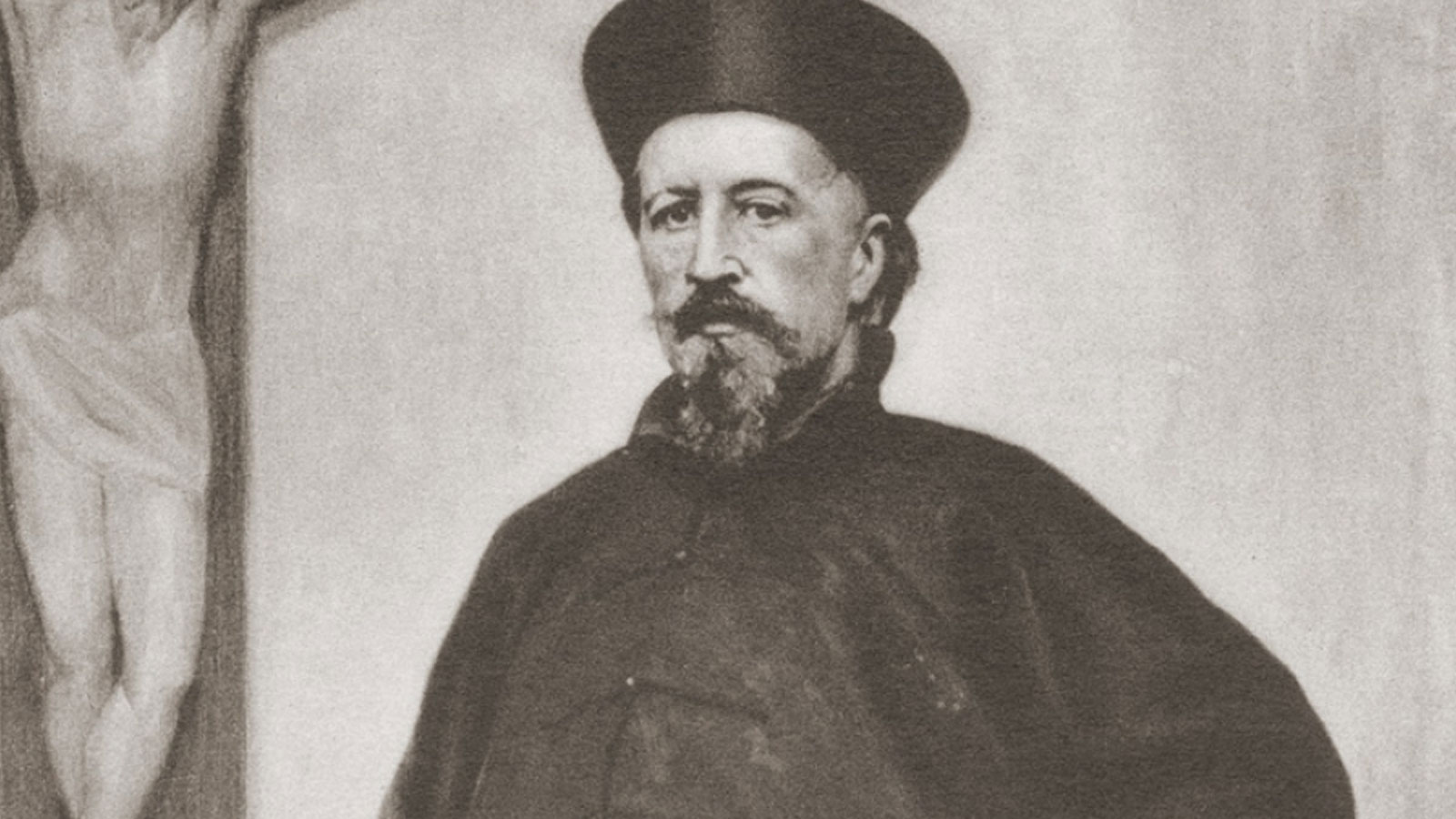
Born into a large family
On June 12, 1823, Théophile Verbist was born in Antwerp into a large family of seven children. Guillaume, the father (1787-1854), native of Antwerp, got married to Catherine Van Honsem in 1813. One year later, a son, Pierre was born. The young mother died a few years later. In 1819, Guillaume married again with Catherine Troch (1797-1852), native of Dendermonde, daughter of a surgeon. Six children were born of this marriage. The first, born in 1821, was named Guillaume after his father. Then followed: Athanase (1822), the twins Théophile and Edmond (June 12, 1823), René (1826) and a daughter Élisabeth (1832). French was the mother tongue of the family Verbist; yet the children also knew Dutch.
Diocesan Priest
When the twins Théophile and Edmond were seven years old, they went to the Jesuits’ school in Antwerp. Later, they studied at the minor seminary of Mechelen. The twins separated in 1842, when they had completed their college studies. While Edmond started to study law to become a lawyer, Théophile wanted to become a priest. He had first two years of philosophy and then, he went to the major seminary of Mechelen to study theology for three years, as it was the custom in those days.
On September 18, 1847, Théophile was ordained priest in Mechelen by Cardinal Sterckx.
Supervisor at the minor seminary
In the beginning of October 1847, Théophile Verbist was appointed Supervisor at the minor seminary of Mechelen. The students called him “good Mister Verbist.”
Chaplain at the military school
In August 1853, he was appointed Chaplain at the military school in Brussels and assumed this function for about ten years at the military school. As a rule, he was a bit reserved and cautious, but he could defend his point of view ardently and firmly. However, it was especially his kindness that caught the attention of many as a special.
Chaplain of the Sisters of Notre-Dame de Namur
Théophile Verbist was Chaplain of the Sisters of Notre-Dame de Namur. According to the sisters who watched their Chaplain, Théophile Verbist had a half-an-hour meditation before the Eucharistic celebration and after the celebration he had a prayer of thanksgiving. The sisters believed that he was really a man of Prayer.
Director of the Holy Childhood
In 1860, while Chaplain at the military school and Chaplain of the sisters, Théophile Verbist was appointed National Director of the Work of the Holy Childhood in Belgium. He probably accepted this appointment because it matched with his missionary vocation that he had been “nurturing for a long time.”
Théophile Verbist’ Missionary Vocation
In the beginning of the Annales de l’Œuvre de la Mission belge en Chine, we read that that a “happy event” decided on Verbist’ missionary vocation. This event refers to the news reported in the papers that the doors of China had been opened. An English-French military expedition, called the Second Opium War by the Chinese, ended up in the Tianjin Treaty of 1858. It was ratified by the Beijing Agreement between the Chinese Emperor and the French Emperor on October 25, 1860. This treaty also opened the doors of China to the missionaries. This news aroused great hopes among the missionaries in France and elsewhere. It also stimulated Verbist’s missionary vocation that he had nurtured “for a long time.” He soon mentioned it to Aloïs Van Segvelt, Frans Vranckx and Remi Verlinden, and together they got in touch with the Church authorities. In 1866, thinking about his missionary life, Théophile Verbist wrote from Xiwanzi to his sister: “Here I am in China, dear Élisa (Élisabeth); the dream of so many years has come true. Every day I thank the good Lord for it, because I believe that here at least I shall be able to attain the goal I had in mind when becoming a priest: for love of the good Lord to work successfully for the happiness of his creatures.”
Founder of the CICM
As a member and sympathizer of the Holy Childhood and later as its national director, Théophile Verbist knew about the lack of orphanages in China and planned to found an orphanage there. He planned to do together with some Belgians priests. By strenuous efforts he overcame numerous obstacles, until his Belgian Mission in China was finally established.
On November 28, 1862, Engelbert Cardinal Sterckx established canonically the Congregation of the Immaculate Heart of Mary. After he consulted the other members, he appointed Théophile Verbist as the Superior General.
On November 14, 1863, the Propaganda granted “the decree of praise” to the new Congregation and so it passed from diocesan right to pontifical right. This decree was the first degree of pontifical approval. Rome granted a temporal approval to the Congregation in 1888 and the final approval in 1900.
Apostolic Provicar of Mongolia
On September 12, 1865, Théophile Verbist is appointed Apostolic Provicar of Mongolia by the Propaganda.
Departure for China, mission and death
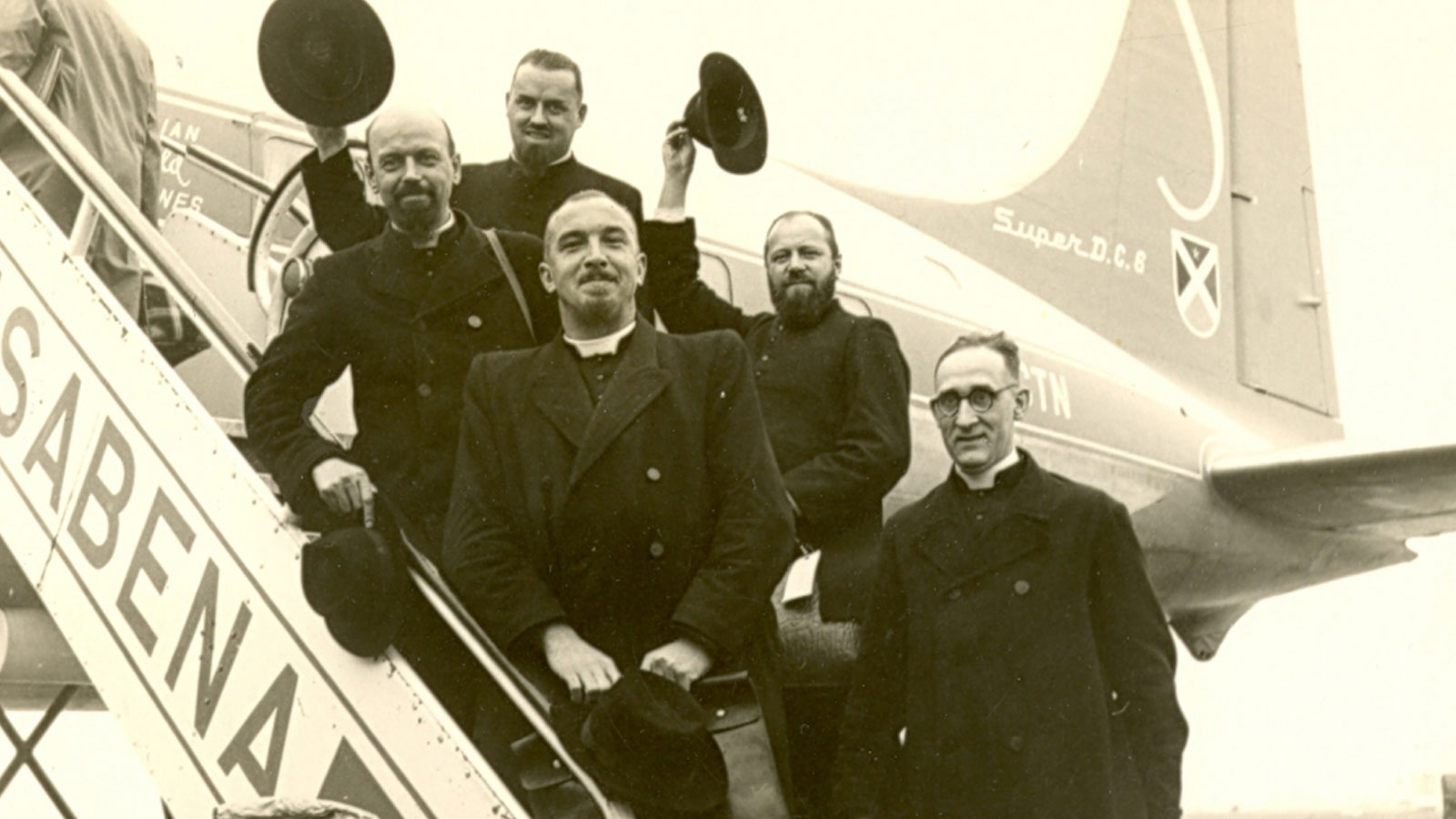
In 1865, Théophile Verbist and four other zealous companions made their final preparations for their mission in China. On December 6, they arrived in the village of Xiwanzi, in the Province of Inner Mongolia, north of the Great Wall.
There they set up a base, getting to work immediately on plans to administer the vast territory that lay before them: organizing small Christian communities, attending to an orphanage and school, and training seminarians. “It's difficult. Such a pity that we are so few,” Father Verbist used to say to himself whenever he considered the vast task ahead of him. But guided by the Holy Spirit, he and his team were able to overcome the obstacles - notwithstanding the harsh terrain, the severe weather, the immense distances to be covered, and the local language. These missionaries also faced many critical situations, including famine, sickness, accidents, and martyrdom. Father Verbist himself died of typhoid fever at Laohugou, China on February 23, 1868, at the age of 44, less than three years after arriving in Inner Mongolia. His companion, Father Van Segvelt, had succumbed to the same dreaded disease a year earlier. The news of Verbist’ death was known in Belgium and in Holland only at the beginning of June.
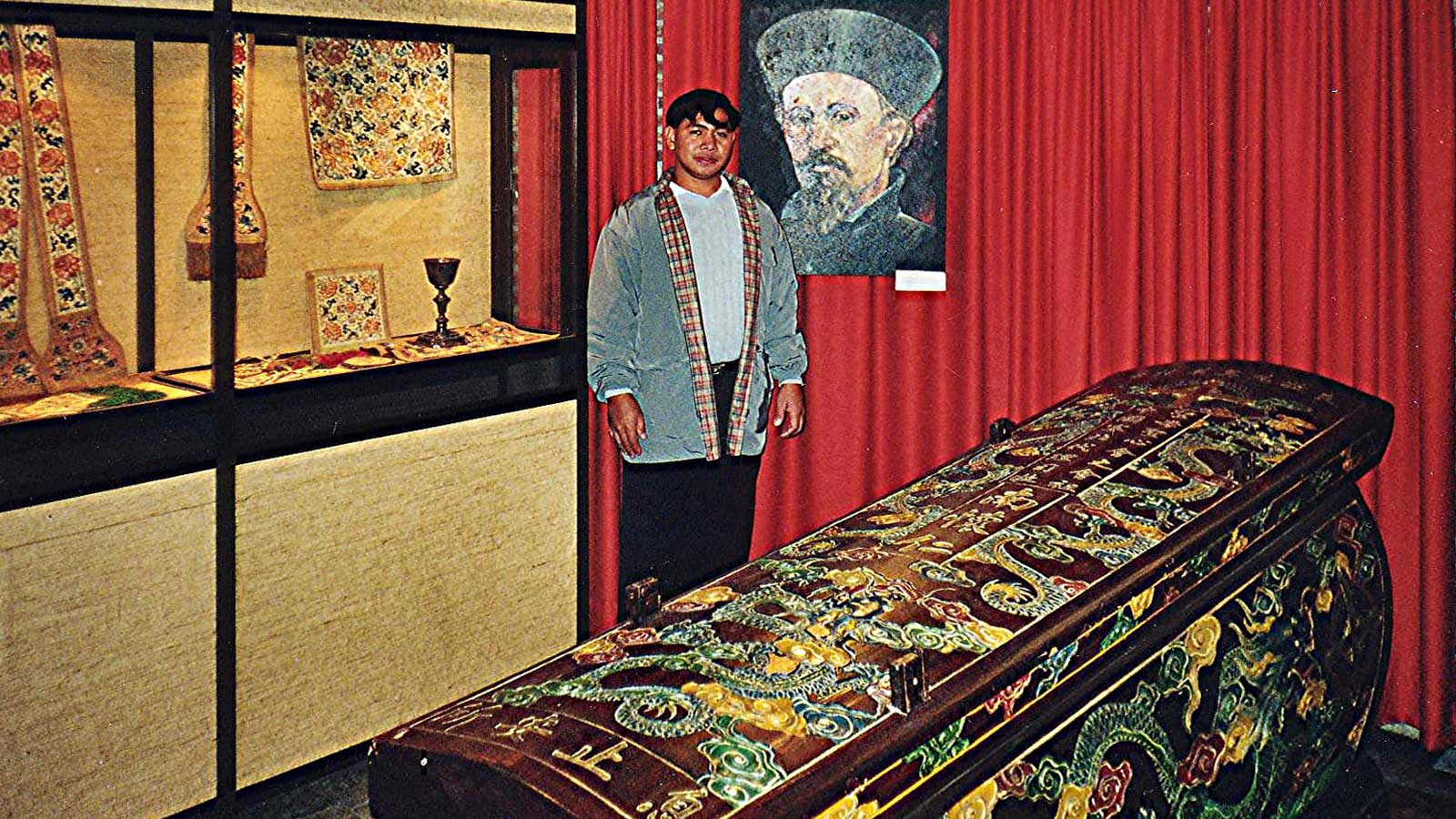
The remains of Théophile Verbist
In 1930, Constant Daems, the Superior General decided to bring back the remains of the Founder to Scheut-Brussels “so that his tomb may be for everybody a privileged place of true apostolic spirit and total gift of self.” His remains were placed in a splendid coffin, Chinese in shape and oriental in decoration. It arrived at Scheut on Sunday, May 10, 1931.
“The Congregation of the Immaculate Heart of Mary (Missionaries of Scheut), whose principal house is located in Rome, was founded by Rev. Theophile Verbist, a Belgian priest. Appointed National Director of the Work of the Holy Childhood in 1860, he began to follow the missionary work among the Chinese attentively and with special interest”.
CICM Constitutions, General Directory, “Decretum” of the Congregation for the Evangelization of Peoples.
Although not a canonized saint, the fact that his foundation has grown to what it is today is testimony to the love and work of Father Verbist and the power of the Holy Spirit within him.
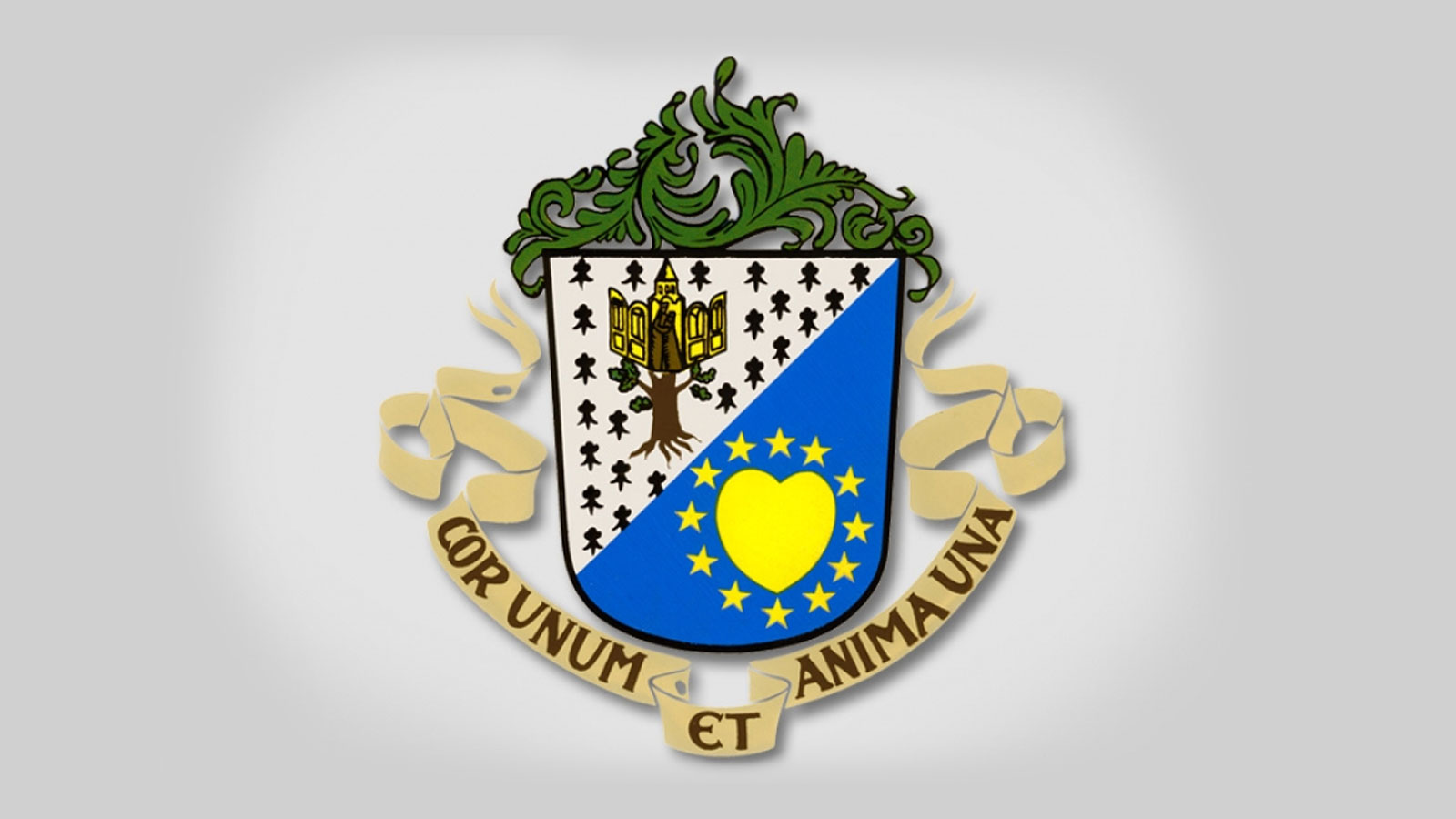
ABOUT OUR LOGO
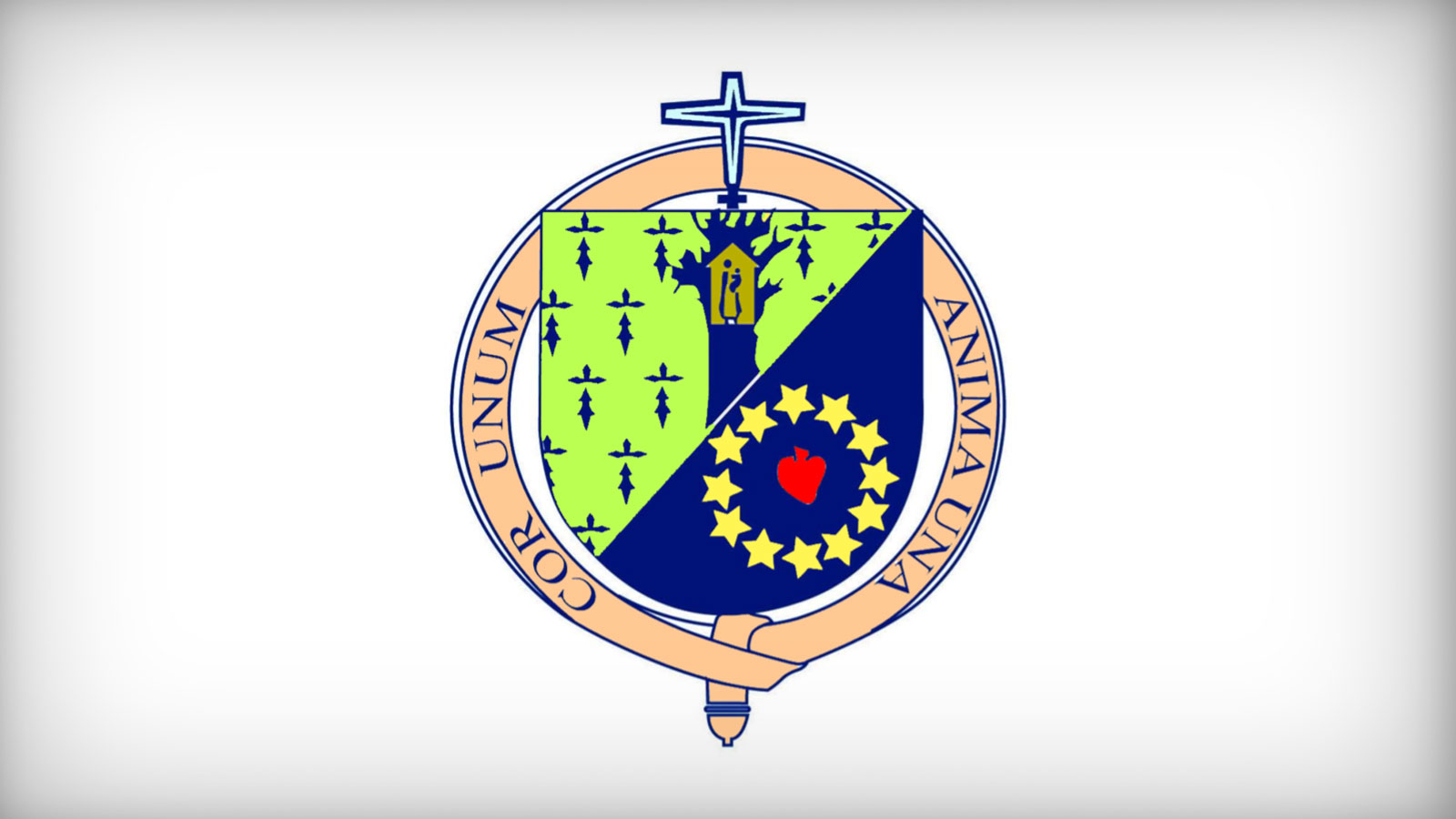
The CICM emblem was first published in the Chronica of April 1934 without official explanation. However, the official explanation of the CICM logo can be considered to be what is read in the “Report of the Vicar General to the General Chapter of 1947.” Addressing the question of religious life in CICM, Jozef Vandeputte (who guided the Congregation first as Vicar General after the death of Constant Daems from 1935 to 1947 and as Superior General from 1947 to 1957) addressed the Capitulants in the following way:
Each of you will still remember that there was a certain tension in the Congregation at the time of the previous Chapter (1930). The letter of the Propaganda dated 1929 giving the results of the canonical visitation undertaken the year before by Father Gubbels at Rome’s request, draws the attention to a certain disagreement among the CICM members, and to Rome's wish to have it solved as soon as possible. Our Superior General Constant Daems (Superior General from 1930 to 1934) tried then to restore and strengthen mutual understanding immediately. Looking for an effective solution for that purpose, he had the mortal remains of our Venerable Founder transferred to the Mother House. He wanted it to be the symbol of the bond of unity in the Congregation. More than ever before, he intended to strengthen this bond during his generalate.
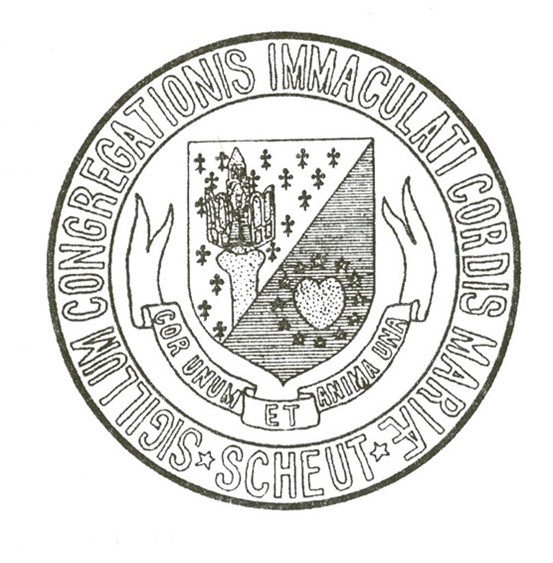
|
The emblem of Constant Daems |
This is what he solemnly declared in his talk to the many CICM present in the refectory of Scheut on Sunday May 10, 1931, the day of the solemn transfer of the mortal remains (of the Founder Théophile Verbist) to our church in Scheut. For the same reason, he renewed the Congregation’s coat of arms and seal, and added the motto Cor unum et anima una. It was approved at the Council’s meeting (of the General Government) of October 5, 1933, shortly before his departure for China and the Philippines. It was about the last major measure of his of his active administration. (Chronica CICM, No. 7, November 2001, pp. 214-215).
- The motto
Théophile Verbist, who died prematurely, barely five years after the foundation of CICM, did not leave us a motto. It was Father Constant Daems who gave it to us at a difficult time in the Congregation's history.
This motto comes directly from the Acts of the Apostles: “The Whole group of believers was united, heart and soul” (4:32). This phrase expresses God's ideal for the humanity He created. It is the heart of the Gospel message. In Jesus, we are children of God, by the Spirit's power, and therefore brothers and sisters of the same family.
Constant Daems chose this motto of brotherhood and joy that would later become a missionary motto.
From the sixties onward, this motto became more and more emphasized in CICM documents, and its content will grow considerably.
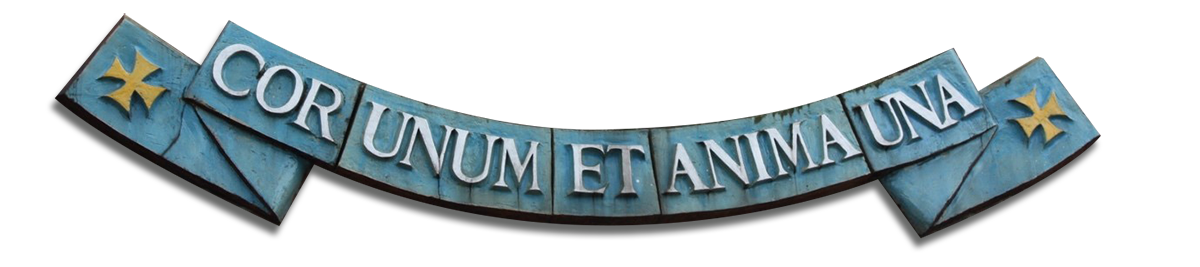
The motto One Heart, One soul, Cor Unum Et Anima Una in Latin, appears in the provisional Constitutions of 1968 (Art. 4). Later on, when referring to our missionary commitment, the Chapter of 1974 declared: “We want to be signs and instruments of brotherhood (Kindling the Fire, p. 45)”. The 1978 General Conference pays special attention to our vocation to universal brotherhood in Jesus Christ. This Conference's report is published under the title “One Heart, One Soul”.
Finally, the 1988 Constitutions also refer to the motto:
“Religious missionaries of different races and cultures, we live and work together as brothers. One heart and one soul, we witness to the Father’s will that all men and women be brothers and in Christ. (Art. 2).”
Remarkably, the motto is directly related to the words “witness to the universal brotherhood. This view of seeing is fairly summarized in a paragraph of CICM Constitutions Commentary (1989): “The ideal of the first Christian community, one heart and one soul (Acts 4:32), has also become our missionary motto (p. 17).”
- The trunk with the Virgin and Child
This is the oldest element found in all the CICM coats of arms. Since the year 1445, Mary's statuette attached to a linden tree by a pious shepherd and dedicated to Our Lady of Grace had been venerated at Scheut. The story goes that pilgrims went to this sanctuary where miracles had been duly noted. In 1455 a chapel was erected there. In the course of the centuries, the chapel was destroyed three times, by the Protestants in 1580, by the Emperor-Sacristan Joseph II in 1783, and during the French Revolution. For about sixty years, the chapel remained in ruins and abandoned until 1855, a well-to-do inhabitant of Brussels, J.C. Brabandt, who could no longer stand the profanation of this sanctuary, bought the land and the chapel, and had it restored at his own expense.
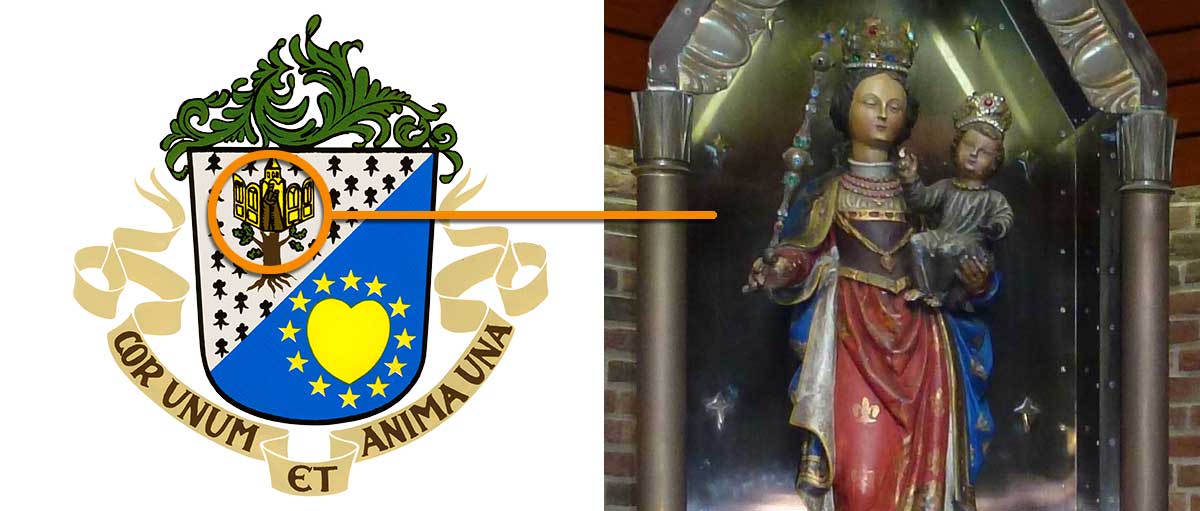
Joseph Rutten (Superior General from 1920 to 1930) wrote that our Founder Théophile Verbist had a great devotion to Mary, which brought him to Scheut, and it was the devotion of several servants of Mary who gave him the sanctuary of Our Lady of Grace.
Why did our Founder and his companions choose the name CICM instead of Our Lady of Grace? Here is one possible explanation. The proclamation of the Immaculate Conception's dogma (in 1854, in reviving Marian devotion, contributed to the rapid development of devotion to the Heart of Mary and the spread of the name 'Immaculate Heart of Mary.' It was then that its liturgical feast was adopted about everywhere in the world. Given such current of devotion at that time to the Immaculate Heart of Mary, it is understandable why our Founder and his companions chose the name CICM.
Why then did they, and others after them, nevertheless keep the miraculous trunk of Our Lady of Grace as the CICM coat of arms? Here are some indications. It was at Scheut, near the sanctuary of Our Lady of Grace, where the CICM was born. Our Founder and his companions lived there; they met there many times, they immersed themselves in the history of the sanctuary; and they prayed to our Lady of Grace. It was there, too, where they prayed one last time before departing for mission.
After the 1974 Chapter, a century after the Founder's death, the old sanctuary of Our Lady of Grace was replaced by another chapel. The statue that J.C. Brabandt had placed in his chapel and restored in 1855-1860, is now found in the new chapel at Scheut.
- The heart surrounded by twelve stars

It is generally said that the heart of the twelve stars comes from a text of Revelation (12:1): “And a great sign appeared in heaven, a woman adorned with the sun, with the moon is under her feet, and on her head a crown of twelve stars”. Our predecessors opted for a traditional Catholic interpretation and saw Mary, the Woman with twelve stars.
- The arms are placed inside a shield
The shield is the field that contains the parts of the coat of arms.
- (The trunk with the Virgin and Child) on an ermine background
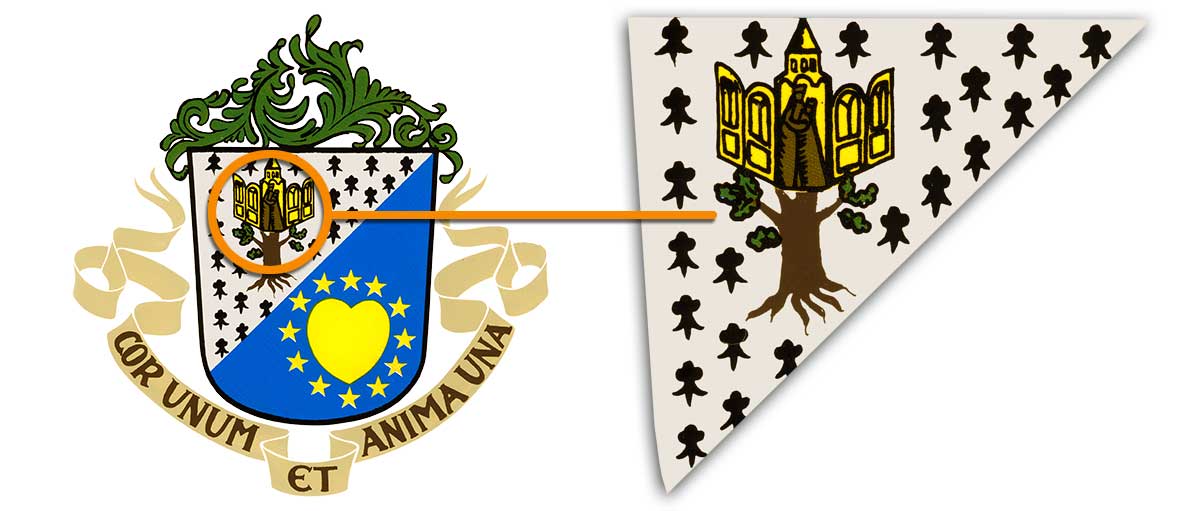
In heraldry, an ermine refers to a black spot on a white background. Reminiscent of the winter coat of the graceful Mustelidae. This animal has long symbolized courage, nobility, and purity.
The CICM emblem has had so many other minor changes and adaptations. Thus, for example, the round form of the emblem’s shield, the changing position of the different elements inside the emblem, and the drawing of the emblem on a ceramic tile of different formats for use as a door handle or simply as decoration. Some CICM Provinces, such as in the Philippines, added some elements and translated the motto. The emblem made by the General Government, after it transferred to Rome at the end of 1967, carried again in Latin the name “Congregation of the Immaculate Heart of Mary, Scheut”, albeit without the motto.
Those who would like to know the different stages of evolution up to the present emblem are requested to consult the articles of our confrere Nestor Pycke, “Emblem and Spirituality CICM 1st Part” in Chronica CICM, No. 7, Sept.-Oct. 2001, p.213-217; 2nd Part in Chronica CICM, No. 8, November 2001, p.260-266; 3rd Part in Chronica CICM, No. 9, December 2001, p.305-309.